What is a web app, and how is it different from a website?
A web app is software that runs in the browser and that people work with, not just read. It has user accounts, a database, rules about who can see and change what, and usually reports or exports.
A presentation website tells people what your company does. A web app does part of the company's work: it takes orders from partners, keeps track of a fleet, shows sales per location or replaces a spreadsheet that ten people fill in. That's where the price difference comes from: in an app, every screen has logic behind it, not just text and photos.
What makes a web app more expensive?
Price grows mainly with the number of roles, integrations and data sources. The number of pages matters much less than it does for a website. Two apps with the same number of screens can cost very differently if one only displays data and the other receives it from three systems and passes it on to two more.
- Roles: an admin, a manager and an employee who see different things means access rules designed and tested for each of them.
- Integrations: connecting to an ERP, delivery platforms, a payment processor or the tax authority takes time for each system.
- Existing data: importing from an old spreadsheet or a retired program can be a job in its own right.
- Documents and exports: invoices, delivery notes, PDF reports or files for the accountant.
- Automations: alerts, emails and tasks that run on their own at set times.
How much does a web app cost at ZED-ZEN?
At ZED-ZEN, web apps start from 1,500 RON, with three indicative tiers. We set the final price once we've written down together what the app must do, for whom and with what data. These are starting prices, not fixed packages: a tier tells you where the conversation begins.
- Dashboard Starter, from 1,500 RON: 2–3 key metrics from one data source, with secure access.
- Dashboard Standard, from 2,200 RON: 4–5 metric modules, alerts, role-based access and 1–2 integrations.
- Premium web platform / BI, from 3,000 RON: multiple roles, ERP or delivery-app integrations, exports and reporting.
What does a real web app we built look like?
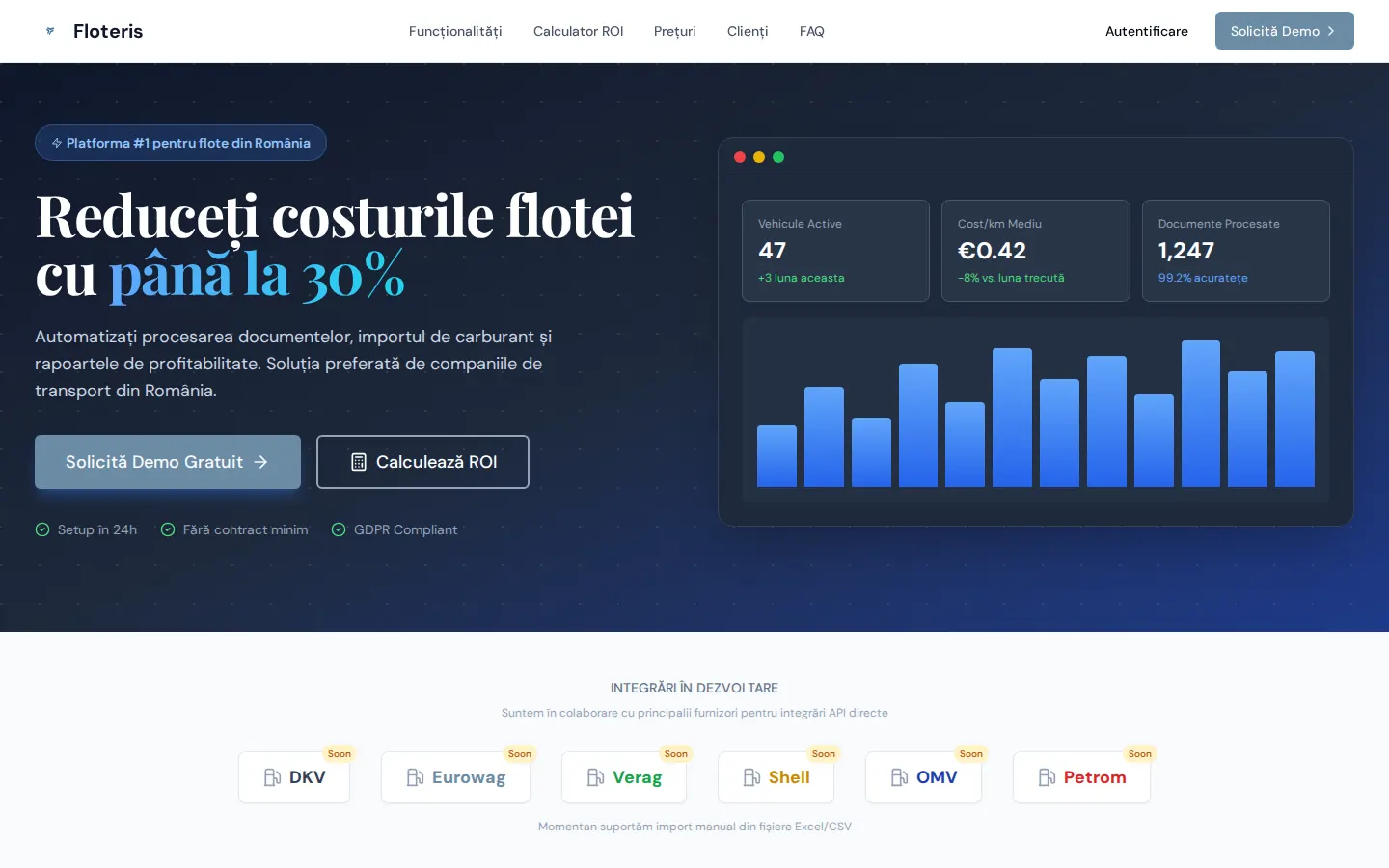
Three examples from our portfolio show how different they can be. Floteris is an app for transport companies: it processes transport documents automatically, imports fuel data from card issuers and produces profitability reports per vehicle and per trip. The problem it started from was simple: vehicle documents kept expiring, and nobody knew the real cost of a trip.
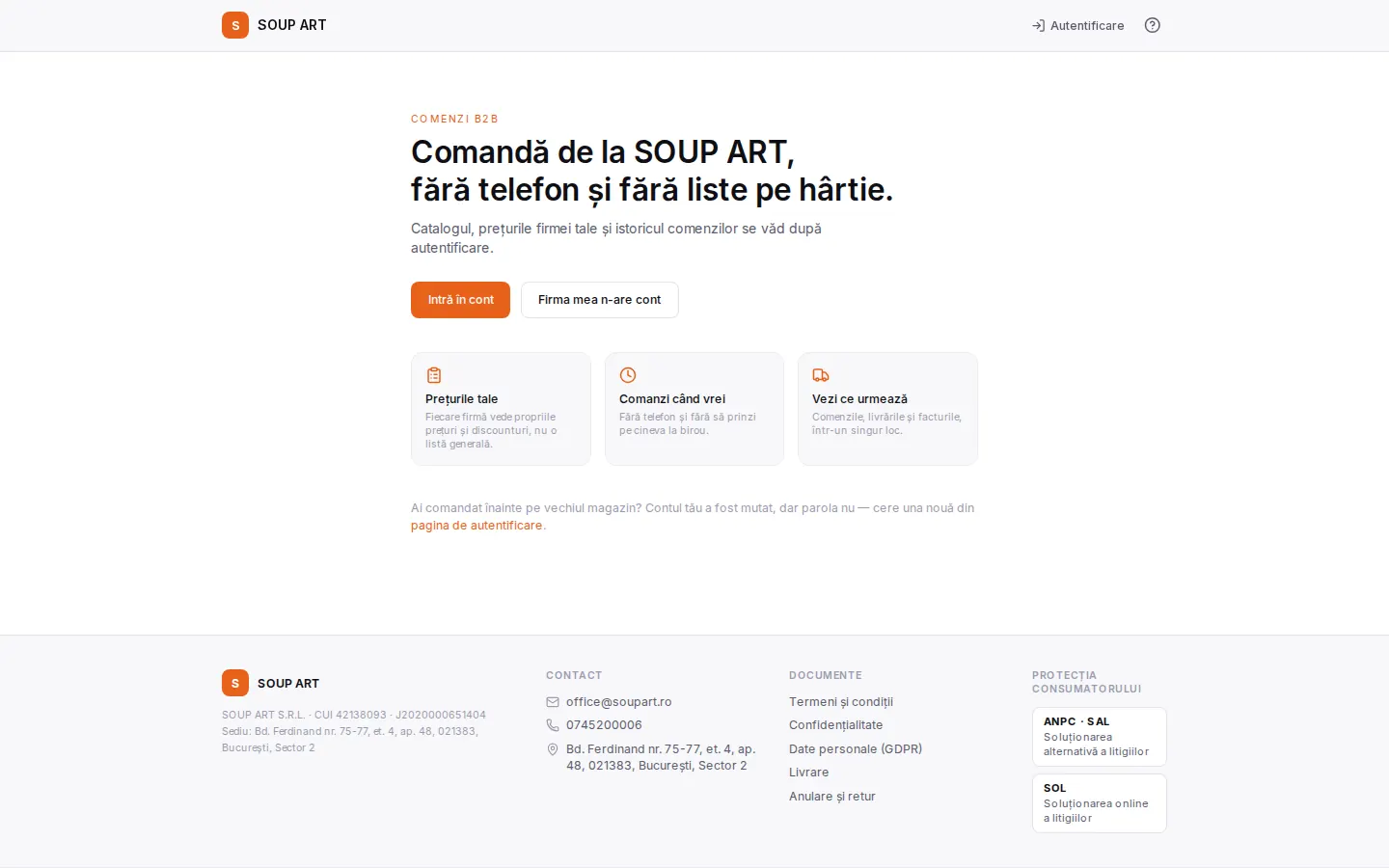
The B2B shop for SOUP ART replaced orders that came in by phone and email, with negotiated prices kept in a spreadsheet. It brought a catalogue with per-customer prices and online ordering, and was later moved into HoReCaOS without losing the existing accounts.
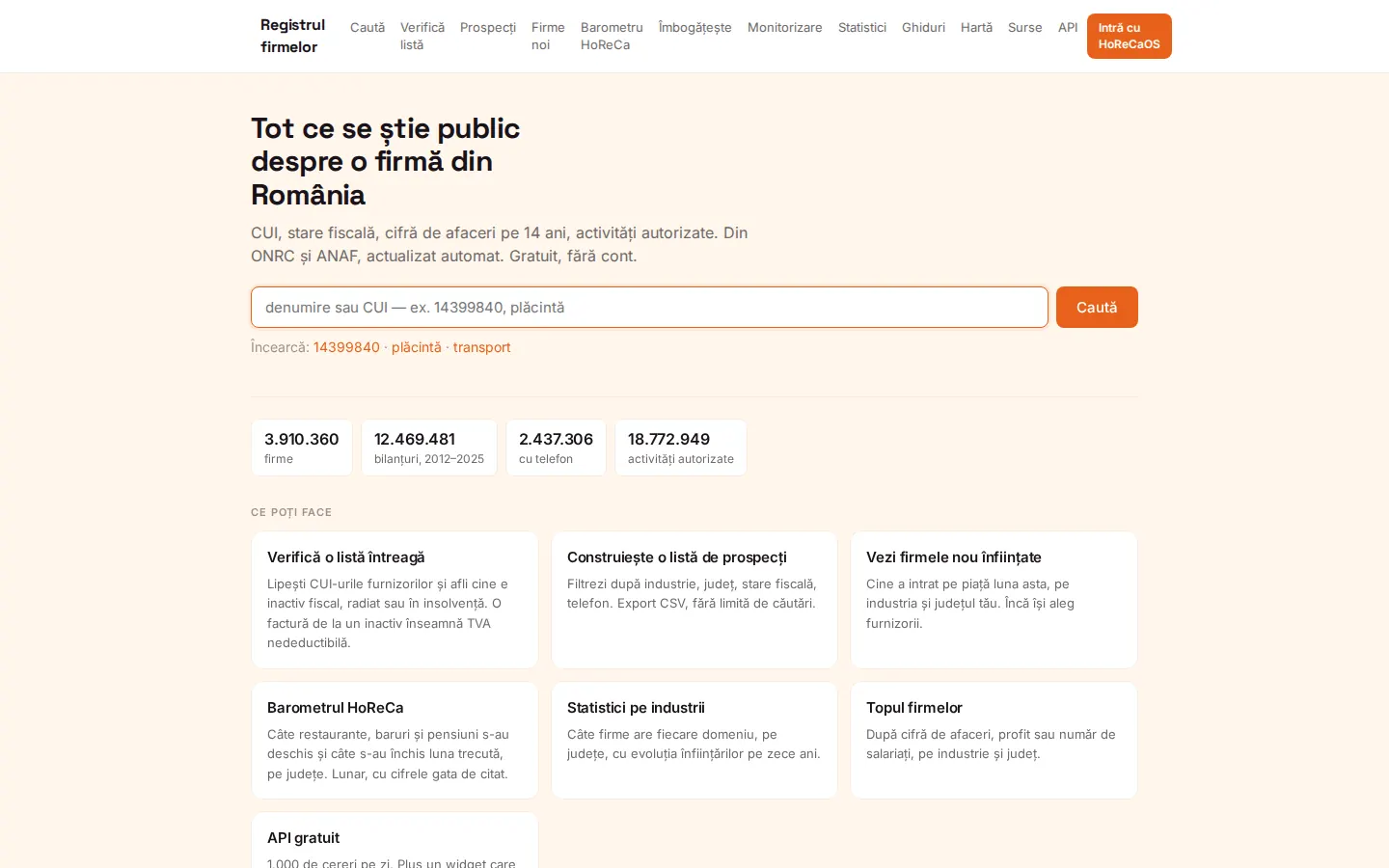
The company registry sits at the other end: a public database of 3.9 million companies and 12.5 million balance sheets, built from ANAF and ONRC data, with instant search and an API used by HoReCaOS: you type a new partner's tax ID and the rest of the details fill themselves in.
How long does it take to build a web app?
We deliver a simple web app in 1–2 weeks, because we start from an architecture we already run in production. For large platforms or complex integrations, we set the timeline in the quote once we know exactly what needs building.
The path has the same steps every time: we write the scope (what the app does, for whom, with what data), design the main screens in your brand and validate them before any code, build, then launch. Most time is saved at the first step. A clear scope shortens everything that follows, and a vague one gets paid for twice.
What costs come after launch?
After launch you still have hosting, updates, monitoring and small changes, in other words maintenance. At ZED-ZEN, maintenance plans start from 100 RON a month, and every project comes with a warranty period.
On top of that, there may be costs for external services the app uses: sending SMS, a payment processor or a maps service. These are paid directly to the provider and depend on volume. We list them separately in the quote so you see the total cost, not just the build price.
When is off-the-shelf software better than a custom build?
Off-the-shelf software is better when your problem is a common one that hundreds of other companies in your field also have. Accounting, invoicing or the cash register are good examples: mature products exist and there's no point reinventing them.
A custom app is worth it when the way your company works is its actual advantage, or when the tools you already have don't talk to each other. For restaurants we built HoReCaOS, which starts from €5 a month per module, precisely so that a venue doesn't pay for a custom app to cover needs every venue has.
Frequently asked questions
What's the minimum price for a web app?
At ZED-ZEN, web apps start from 1,500 RON, for a dashboard with 2–3 key metrics from one data source and secure access. The final price is set once we agree on what the app must do.
Web app or mobile app?
For teams working at a desk or on a tablet, a web app is usually enough and updates without going through app stores. For customers who use it daily on their phone, with notifications and a loyalty card, a mobile app is worth it. With us, iOS and Android apps also start from 1,500 RON.
How much does web app maintenance cost?
ZED-ZEN maintenance plans start from 100 RON a month and cover hosting, monitoring, updates and small changes. External services such as SMS or payments are paid separately, directly to the provider.
Who owns the code after the project?
Rights to the code and design are set out clearly in the contract before we start. If you have a specific ownership requirement, tell us at the outset.