Where does AI genuinely help in a restaurant?
In tasks that repeat, follow clear rules and eat time: reading and answering messages, summarising numbers, checking invoices, writing similar texts day after day. There, a language model connected to your data does in seconds what takes a person tens of minutes.
It doesn't help where taste, the relationship with guests in the room or a high-stakes decision matter. Our rule: AI prepares, people decide. A review reply or a supplier order goes out after someone has looked at it, at least at first.
Can AI reply to reviews?
Yes, as a draft. The AI reads the review, works out whether it's praise or a complaint and suggests a reply in your brand's tone that refers to what the customer actually wrote. A manager edits and publishes. Simple positive reviews can be more automated; complaints need a human to read them.
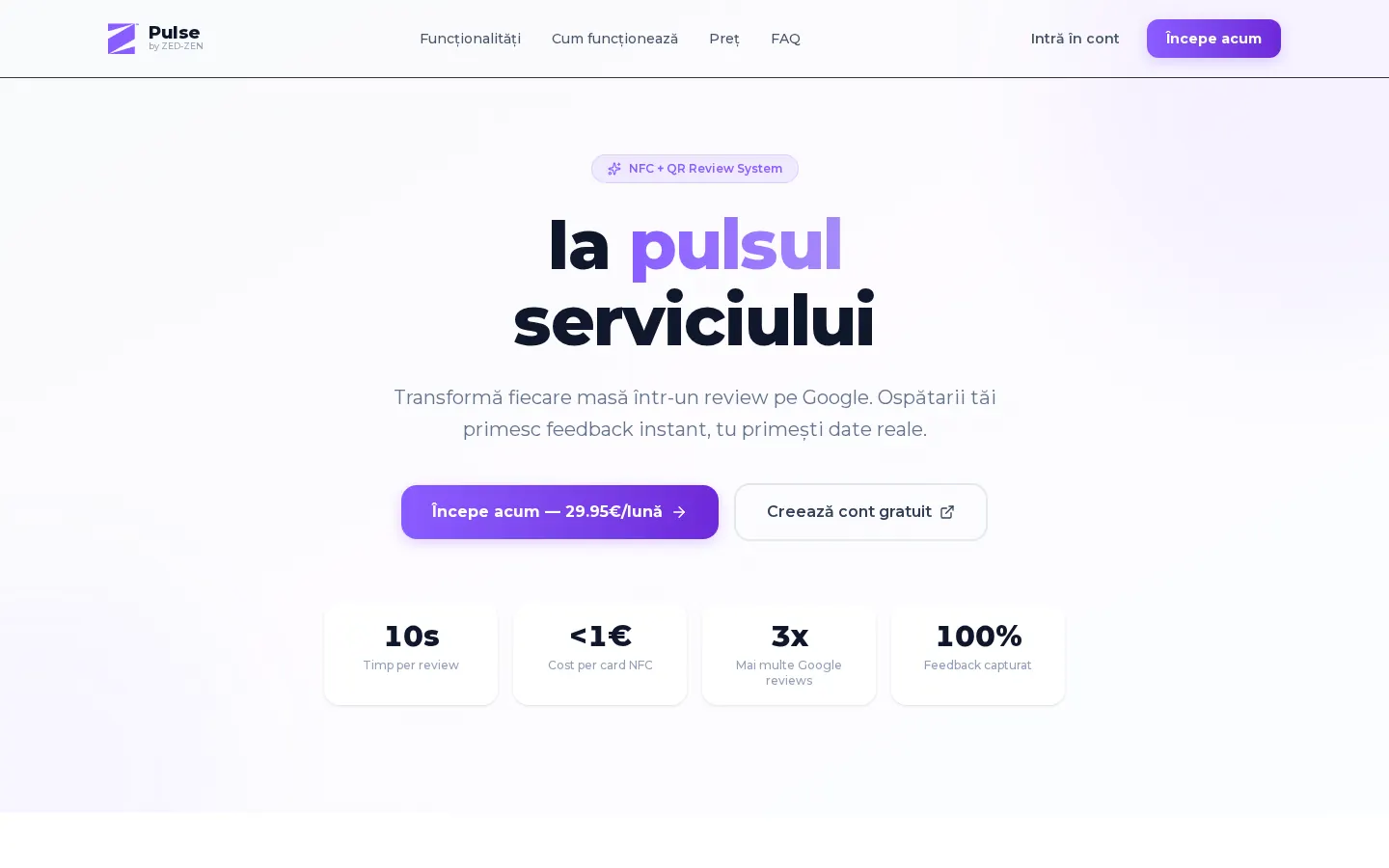
First you have to collect reviews. In HoReCaOS, the Pulse module gathers reviews via NFC and QR at the table, and replies can start from there. A generic reply pasted under every review is noticed instantly and does more harm than no reply at all.
What does an AI-written daily report look like?
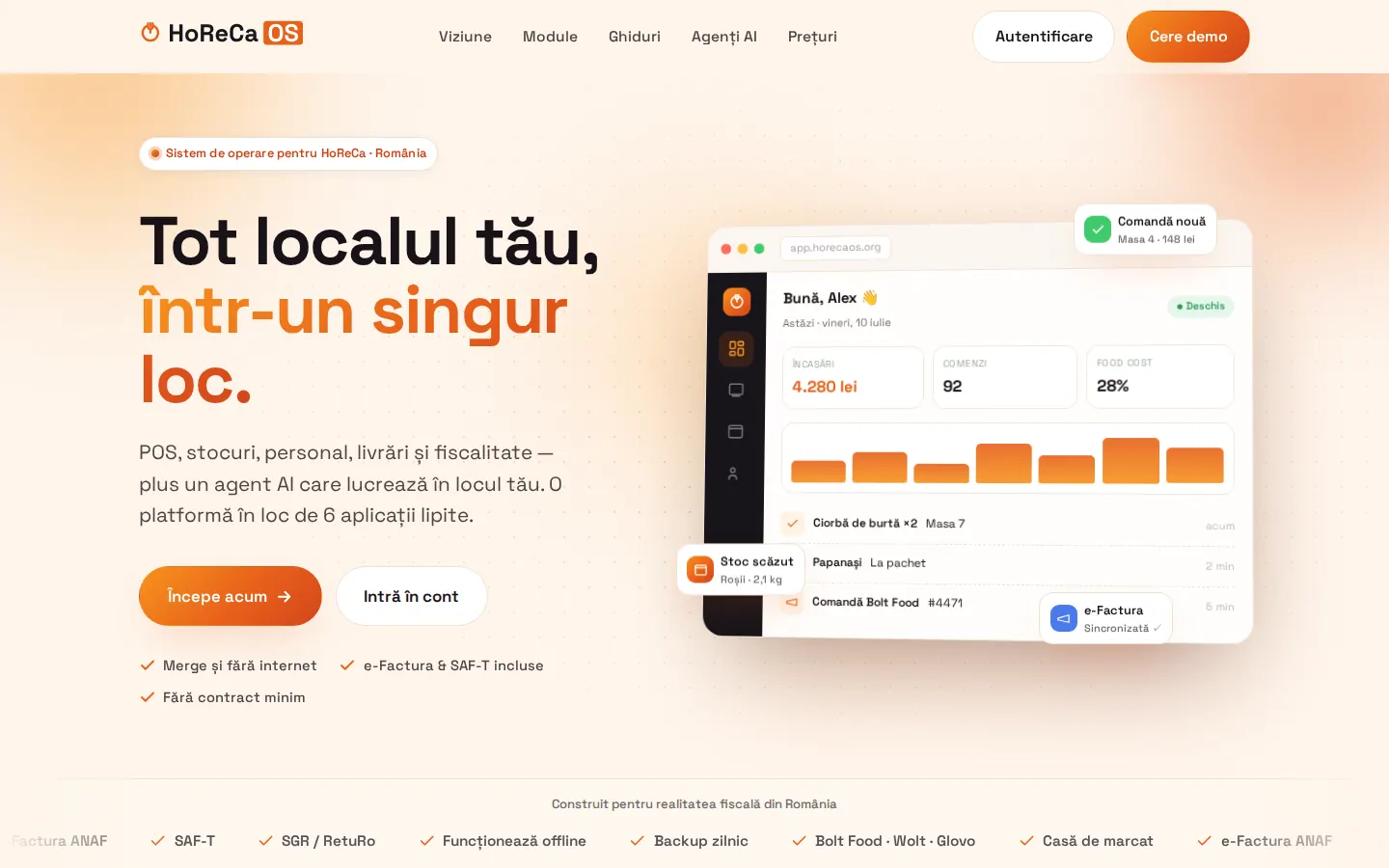
A few lines, not a spreadsheet. Yesterday's sales compared with the same day last week, the channel that went up or down, top dishes, cancellations and anything unusual. The AI doesn't make up numbers: it reads them from the system and puts them into words.
The value lies in what it spots: a location that sold well below average, a dish that vanished from sales, a delivery channel that dropped off in the afternoon. The report lands by email or on your phone in the morning, and the owner knows where to look without opening ten screens.
Can AI handle orders and questions on WhatsApp?
It can answer frequent questions: opening hours, today's menu, allergens, address, whether there's a table. It can also take a simple order, which a person or the ordering system then confirms. It has to be connected to your real menu and hours, otherwise it answers confidently and wrongly.
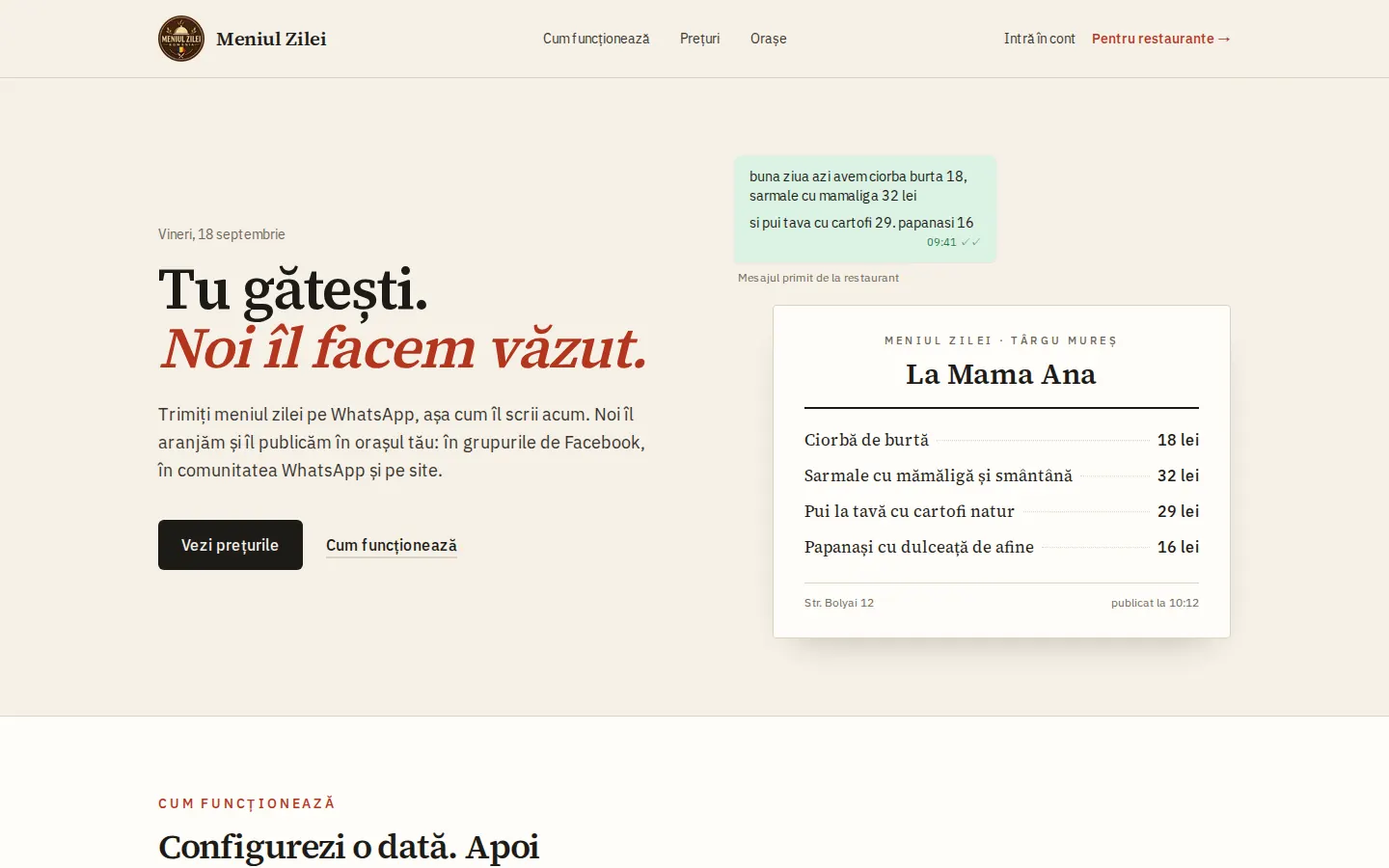
An example from our work: at Meniul Zilei, the daily menu sent over WhatsApp is picked up automatically and published, without anyone retyping it. When a customer asks something the AI doesn't know, the conversation should pass to a person instead of going round in circles.
What are stock and price alerts?
They're messages that appear on their own when something is off: an ingredient drops below its minimum level, a supplier raised a price, a recipe's food cost went up. The data comes from the stock system and invoices. In HoReCaOS, food cost is calculated from e-Factura invoices, so a price change shows up in the recipe cost.
The AI part helps with explanation and prioritising: not twenty alerts, but “three things that matter today”. Simple alerts don't need AI, just good rules. AI earns its place when many signals have to be read and summarised into something a busy owner will actually read.
What is an MCP connector, and how do you ask Claude or ChatGPT about your restaurant?
MCP (Model Context Protocol) is a standard that lets an AI assistant connect to an application and read its data. HoReCaOS has an MCP connector: add it to Claude or ChatGPT and ask directly, “how much did we sell yesterday on each channel?” or “which items are close to zero stock?”. The answer comes from your data, not from the internet.
Access is read-only and limited to the connected user's account and permissions. A location manager sees their location, not the whole chain. The assistant can't change prices or stock through the connector. It's a way to ask questions, not to give orders.
What are the limits of AI in a restaurant?
AI can be confidently wrong. If it isn't connected to real data, it makes things up. If the data is wrong, the summary is wrong. So any automation starts with clean data: correct menu, recipes, invoices, stock. Without that, AI just makes mistakes faster.
There are also model usage costs, which grow with volume, and customers' personal data, which needs care under GDPR. Automations start from 800 RON for simple flows, and HoReCaOS from €5/month. Start with one annoying task, measure whether it saves time, then move on to the next.
Frequently asked questions
Will AI replace my staff?
No. It takes over repetitive office tasks like reports, messages and checks, so people have time for guests and the kitchen.
Can I ask ChatGPT about my sales?
Yes, if your system has an MCP connector, as HoReCaOS does. The assistant reads data from your account, with your permissions, read-only.
Is it safe to connect AI to my restaurant data?
Risk is reduced with read-only access, per-user permissions and not sending unnecessary personal data. Also check your AI provider's data policy.
Can AI publish review replies on its own?
Technically, yes. We recommend a person approves replies, especially to complaints. A wrong answer to a bad review stays public.
How much does an AI automation cost?
From 800 RON for simple flows. On top of that comes the model's usage cost, which depends on volume.
Where should I start?
With the repetitive task that annoys you most. Just one, done well and measured, before automating anything else.