How is an online shop different from a showcase website?
The difference is that an online shop takes money, so there is logic behind it, not just pages. A showcase site presents your business, products and contact details. A shop has to know which products are available, what delivery costs to the customer's address, pass the payment safely to the processor and show you the order in a panel where you can follow it.
That's where the price gap comes from. At ZED-ZEN, a 5–8 page showcase website starts from 1,500 RON, with the first year of hosting included. A site with online ordering, a cart and payments starts from 2,200 RON. The extra 700 RON don't pay for pages; they pay for the cart, the payment flow, the delivery zones and the admin panel, which are exactly the parts that aren't allowed to get things wrong.
What do you get with an online shop from 2,200 RON?
You get a complete shop for a small business: 10 to 15 pages, a cart, online payments, delivery zones and an admin panel. In practice, the package covers the whole journey of an order, from the product seen on a phone to the order showing up in your panel.
- The catalogue: products with photos, descriptions, prices and categories, designed for mobile first.
- Cart and checkout: customers add products, pick delivery and pay, with no unnecessary steps.
- Online payments: a connection to the payment processor you have a contract with, which is usually where the customer enters their card details.
- Delivery zones: where you deliver and at what cost, so customers see the right price before they pay.
- The admin panel: products, prices, photos and orders, changed by your team without a developer.
When do you need the 3,000 RON version?
You need the Premium platform when the shop is no longer just a shop window with a cart, but part of how the business runs. It starts from 3,000 RON and covers 15–35 pages, multiple user roles, loyalty, a blog and integration with an ERP or with delivery apps.
The signs are fairly clear. You have different customers on different prices, such as B2B partners. You want stock and invoices to come from the software you already use instead of copying them by hand. Several people work in the panel and shouldn't all see the same things. Or you want loyalty points to bring back customers who have ordered once.
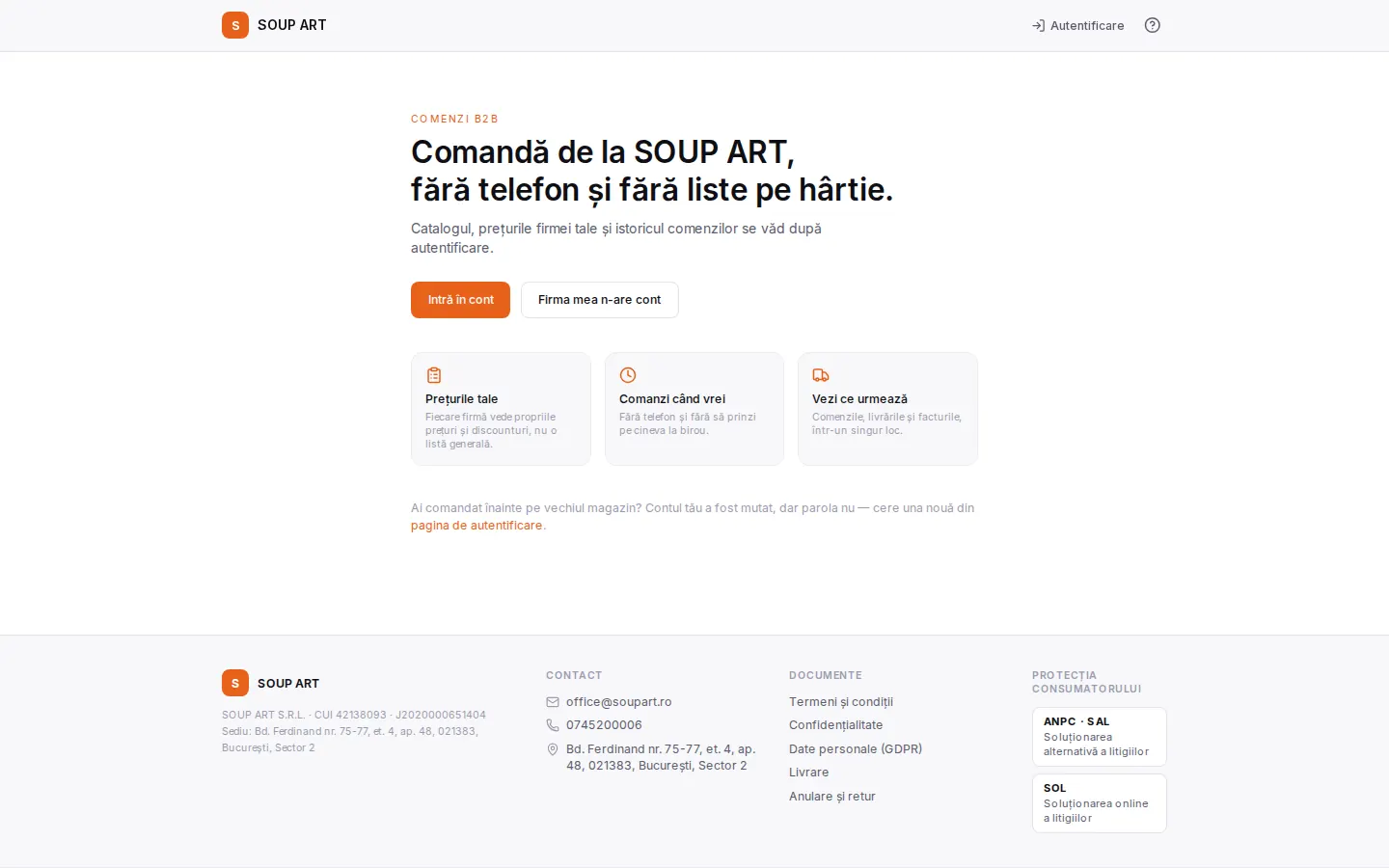
One example is the B2B shop for SOUP ART: a catalogue, per-customer prices, orders and invoices, with payments through Netopia, built so partners would stop ordering by phone and email. Partners kept their existing accounts, and the shop has since become a module in HoReCaOS.
What costs come after launch?
Three costs remain after launch, and it's worth knowing them from day one: the domain, the payment processor's fee and maintenance. None of them is large on its own, but together they are the difference between the price in the quote and what the shop really costs you per year.
The domain is paid yearly to the registrar and should be registered to your company. The payment processor charges a fee on every transaction, under the contract you sign directly with them; check the current rate on their official page, as it differs between processors. Maintenance, meaning hosting, monitoring, updates and small changes, starts from 100 RON a month with us and is optional, but for a shop that takes money we recommend it.
What you don't pay: aggregator commission on orders placed in your own shop. That's one of the strongest reasons to have one, especially if you already have customers who come back.
What does an online shop need to be legally sound?
An online shop needs more legal pages than a showcase site, because it sells at a distance to consumers. In short: visible company details, terms and conditions, a delivery and returns policy, a privacy policy, cookie information and links to the consumer protection authority and online dispute resolution.
The exact rules do change, so check the current requirements on the official sites of the Romanian consumer protection and data protection authorities, or with a lawyer. We build the pages and the places where they appear on the site, and the final wording of the policies has to match how you actually work: your delivery times, how you handle returns, which data you keep.
How long does it take to build an online shop?
A simple online shop is usually delivered 1–2 weeks after signing. The real timeline depends less on the code and more on how quickly your products are ready: photos, descriptions, prices, delivery zones and the contract with the payment processor.
The processor contract is the part people leave for last, and it's the one that most often delays launch, because the processor checks the business and the site before switching payments on. It's worth starting it in parallel with the build. Versions with integrations, such as an ERP, take longer, because they also depend on access to the other system.
What should you pin down in a quote for an online shop?
Get in writing what's included, who does what and what you're left with at the end. Two quotes with the same price can mean very different shops.
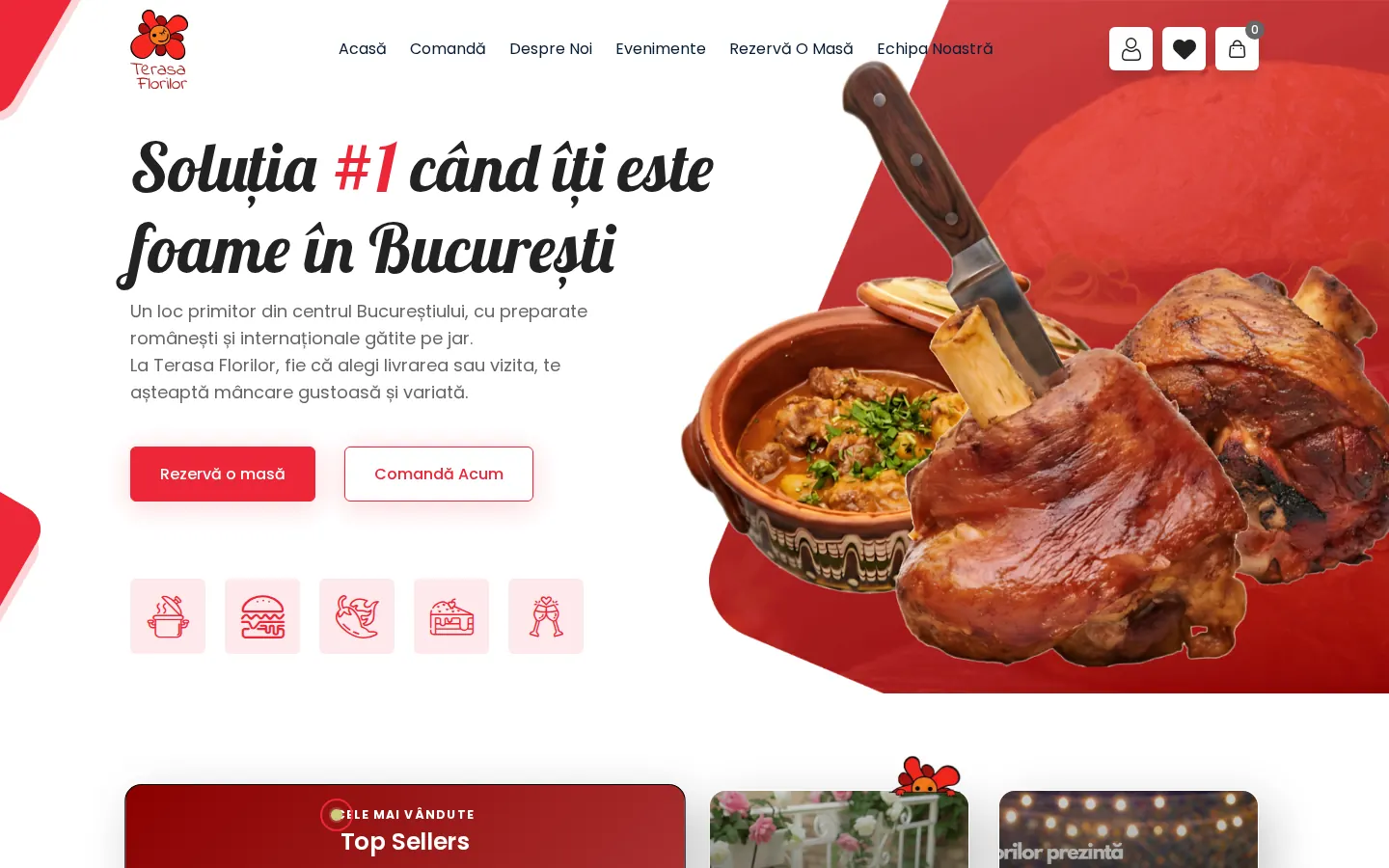
Ask how many pages and products are included, which payment methods are connected and who loads the products at the start. Ask whether the order price is recalculated on the server, not just in the browser; at Terasa Florilor, for example, every online order's price is recalculated on the server, so nobody can tamper with the total in the page. Ask what your team can change on its own in the panel: there, the restaurant's team edits products, photos, coupons and users without a developer.
Most importantly, ask who owns the domain, the code and the customer data. The right answer is: you do. Every ZED-ZEN project comes with a warranty period, and if you choose maintenance, you talk directly to the people who built the shop.
Frequently asked questions
What's the minimum price for an online shop at ZED-ZEN?
A site with online ordering, a cart, payments, delivery zones and an admin panel starts from 2,200 RON as a one-off payment, for 10–15 pages. The version with multiple roles, loyalty and integrations starts from 3,000 RON.
Is the payment fee included in the price?
No. The payment processor charges a fee on each transaction under the contract you have directly with them. Check the current rate on their official page before you choose.
Can I add products to the shop myself?
Yes. The online ordering packages include an admin panel where you change products, prices, photos and orders without a developer, as the team at Terasa Florilor does.
Is my own shop worth it if I already sell on Glovo or Bolt Food?
Usually, yes. Orders in your own shop carry no aggregator commission, and the customer stays yours. Delivery apps bring new customers; your own shop keeps the ones who come back.